


Neck pain is an unpleasant problem that can significantly harm your mood and quality of life.The symptom occurs in 30-40% of the population and can lead to loss of movement and disability.
Based on the causes, the treatment methods also differ.Early diagnosis and quality treatment, started after the problem is discovered, will help you forget about this unpleasant symptom.

Why does your neck hurt?
The etiopathogenesis (development mechanism) of pain is divided into three main groups:
- somatogenic.These include pain due to injuries and inflammation, ischemic processes and mechanical tissue damage.
- neurogenic.It occurs when the structure and function of the central and peripheral nervous system are disturbed.
- psychogenic.In this case, psychological and social factors play a role.Emotional activity can trigger reflex muscle contraction, which causes pain.
The pain can be acute or chronic.If your neck hurts a lot, it's probably a normal reaction to the injury.In order for the pain to stop, you need to wait until the tissues are completely healed or speed up this process.Chronic pain has a different development mechanism - damage occurs constantly and maladaptation occurs.The body cannot cope with the damaging factor on its own.
The causes of pain are divided into two main groups: vertebrogenic (those associated with the spine) and non-vertebrogenic.They can develop through somatogenic and neuropathic mechanisms.in the first case, the structures of the spine and muscles are involved in the process, and in the second, the roots of the spinal nerves and peripheral nerve endings.The psychogenic mechanism comes into action a little later and worsens the current situation.
Vertebrogenic neck pain can be divided into the following subtypes:
- myogenic.Pain occurs when muscles are stretched or compressed.Also, the cause may be a prolonged contraction of muscle fibers.
- arthrogenic.Damage occurs in the joints that connect the vertebrae.The distance between the structural elements of the spine decreases, constant mutual damage occurs, which causes pain.
- discogenic.It occurs when discs bulge, shift and herniate.
- spondylogenic.The cause of pain in this case is damage to the structures of the vertebra, its tissues or processes.This can be a destructive process or a bulky neoplasm that is under external influence.
- neuropathic.The neck hurts due to compression of a root or nerve ending.The reasons may be bulky neoplasm, hernia or hypertrophy of individual structures.
Non-vertebrogenic neck pain is divided into:
- myofascial syndrome;
- pain caused by psychological factors;
- irradiation of pain during a pathological process to other parts of the body;
- symptoms of inflammatory processes.
We'll look at the individual causes of pain below, but for now, familiarize yourself with the risk factors that can cause this symptom:
- incorrect position during work;
- lack of anatomical position of the spine during sleep;
- low level of physical activity;
- too much stress on the spine;
- overweight;
- lack of a rational approach to nutrition;
- impaired drinking regime;
- frequent stress;
- bad habits (alcohol consumption, nicotine).
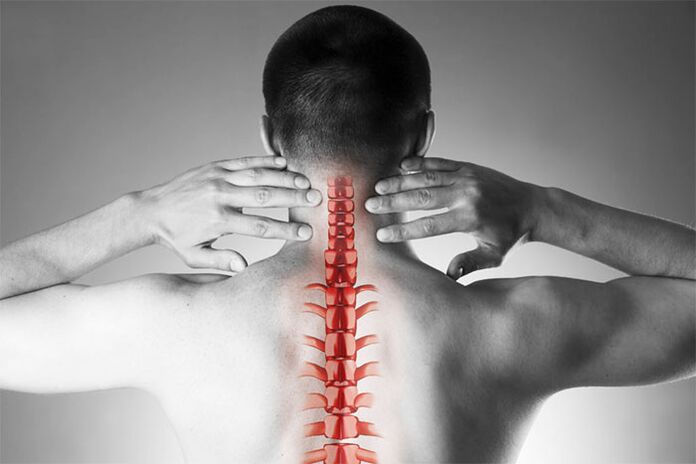
Causes of neck pain
Let's consider the main causes of pain and the mechanism of symptom development in these conditions.
Osteochondrosis
With this pathology, the connections between the joints of the spine are disrupted, disc protrusion occurs and hernias form.The condition occurs in those who have a hereditary predisposition and do not take care of their posture, diet and lifestyle.In addition to neck pain, the person feels general weakness and tinnitus.Fainting and disturbances of consciousness occur.Pain may occur in the arms, the back of the head, and the area between the shoulder blades.Joints may creak when turning the head and numbness may be felt.
The pain associated with this disease is chronic and painful.It can reach such intensity that it becomes difficult to sleep.In the initial stages, the process can be easily corrected, but the more the pathology progresses, the more difficult it is to correct it.
Cervical spine osteoarthritis
The disease is destructive in nature - the intervertebral joints are destroyed, their structure is disturbed and excessive growth of bone tissue occurs.The neck may hurt on one side, the pain also radiates to the upper limb and chest.
Violation of blood vessels and nerve endings leads to hearing and visual impairment, the person becomes more tired, has memory loss and distraction.Lack of effective treatment can lead to complications and disabilities.
Disc herniation
The pathology begins with the bulging of the disc contents, going beyond its normal anatomical position.Even a slight displacement can manifest itself as a pronounced symptom.The spinal canal is narrow and all the nerve roots are close to each other.As soon as a hernia starts to appear, the neck and back hurt.If the patient tries to eliminate the pain with conventional analgesics, the symptom disappears, but the problem remains and, over time, comes to mind again.
Neck muscle tension
Almost everyone has encountered this problem - prolonged tension in the cervical spine or intense training after some time is reflected in severe muscle pain.The pain occurs acutely and often begins to bother you after sleeping.swelling and swelling are noticeable on the injured side of the neck.It becomes difficult to turn the head, the patient tries to give the head the most comfortable position so as not to feel pain.The pain will go away on its own, just give the damaged area rest.To alleviate the situation, consult a doctor: he may recommend a compress or ointment with analgesic.
Spondylosis
The disease is a complication of osteochondrosis, which cannot be treated.The disease is serious and can lead to limitation of a person's physical activity.In addition to osteochondrosis, spondylosis can be caused by trauma.The patient feels constant pain, which may travel to the back of the neck and collar region.Sometimes the neck hurts in a pulsating way, accompanied by stiffness and difficulty turning the head.
To eliminate the disease, complex treatment is necessary, combining the effect on the cause and individual symptoms of the disease.
Cervical myelopathy
The patient experiences neck pain in this case due to the narrowing of the spinal canal.To recognize the pathology in time, it is necessary to pay attention to the following symptoms: the patient feels weakness, numbness and tingling in the limbs.The condition is accompanied by disturbances in speech, coordination and balance.The gait becomes unstable, the position of the body in space is disturbed.If you have recently suffered injuries, falls or road accidents, it is most likely myelopathy.
Whip
In this case, the neck hurts due to soft tissue damage.The mechanism of occurrence is strong flexion and subsequent extension.The patient usually feels pain after a fall or fight.An injury can be recognized by the following sign: the head protrudes slightly forward and the physiological curves of the cervical spine are disturbed.
Trauma
The causes of injuries are impacts, accidents and unsuccessful dives.The patient feels severe pain in the neck and back of the head.Motor activity is severely limited, soft tissues swell, bruises and bruises appear.
Infectious diseases
The inflammatory response, which is a response to an infectious disease, causes acute pain.The mechanism of development is the enlargement of lymph nodes.lymphatic vessels that press on the muscles and lead to their spasm.This condition is seen with sore throat and rubella.
An infectious disease whose main symptom is neck pain is meningitis.The pathology is accompanied by tension in the muscles of the back of the head, the patient is unable to bend the head and is in an abnormally extended position.
Diseases of internal organs
Some conditions of the internal organs can cause pain that radiates to the neck.This is facilitated by the peculiarities of innervation and reflex mechanisms.Thus, pain in the gallbladder, esophagus and heart can radiate to the neck.Also, pain is observed in pathologies of the thyroid gland, larynx and pharynx.
Some of the pathologies can occur normally and are easily treatable.But sometimes the neck hurts due to serious pathologies that require emergency care.
Other reasons
The neck may hurt after the patient has been in a draft or has become very cold.This leads to muscle spasm, which is accompanied by pain.It also happens that a person simply “lies down” while sleeping in an uncomfortable position.After prolonged work, stress or intense training, this symptom may also occur.
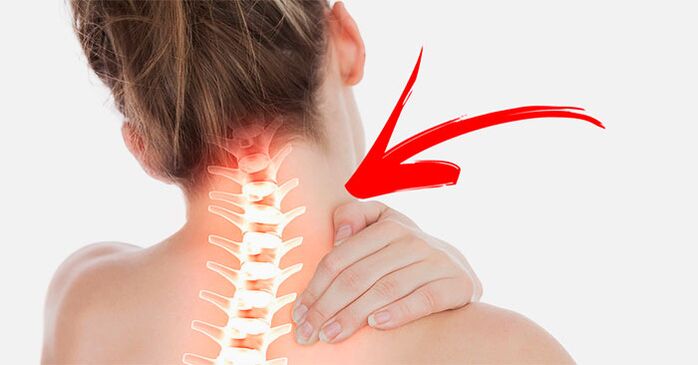
Types of neck pain
This symptom can be divided into the following subtypes:
- cervicago.It is an acute pain and limitation of movement, also known as “cervical low back pain”.
- neck pain.Neck pain due to diseases of internal organs, spine and other causes.You can divide the pain depending on the cause, as described above.Furthermore, the type of pain depends on its nature: acute or chronic.
There is a special committee to study neck pain.She suggested identifying the following types of pain depending on the stage:
Stage 1
Short-term neck pain, which disappears after some time on its own or after changing your lifestyle.There are no symptoms that indicate structural damage.Additional diagnostic and treatment methods are not required.
Stage 2
There are no signs of serious violations of the anatomical structures, however, the patient's daily activity is impaired: there is a need to take painkillers.The condition can be corrected with lifestyle modifications and some exercise.
Step 3
Neurological symptoms appear, additional diagnostics and comprehensive treatment are required.
Stage 4
Signs of organic lesions appear.The patient is bothered by intense and intense pain, which corresponds to tumors, myelopathies or systemic pathologies.Comprehensive, high-quality diagnostics and specialized treatment are required.

Basic principles of treating neck pain
Treatment of neck pain depends on the specific situation and the mechanisms of development of the disease.Furthermore, the choice of method is influenced by the stage of the process and its nature.The attending physician can determine the tactics after a complete examination and additional diagnostic methods.
The beginning of any treatment is a change in lifestyle.This solely depends on the patient and determines the success of other treatment procedures.
These methods also apply to preventive measures to prevent neck pain:
- gymnastics and warming up the neck muscles, which relieves muscle tension;
- general strengthening of the back muscle corset;
- correct position at the table, during work and rest;
- if you do sedentary work, get up periodically and do simple exercises;
- place a pillow under your lower back during prolonged sitting;
- Adjust the position of the monitor so as not to strain your neck.This applies to both your computer and your phone;
- if you often talk on the phone, use a headset or speakerphone;
- when working with documents, use a support so that the papers are at eye level;
- Pay attention to your bed - give preference to an orthopedic mattress and pillow.
- always wear a seat belt when traveling - this prevents injuries and strains in the neck muscles;
- Make sure your diet is balanced and rational.In addition to the normal combination of proteins, fats and carbohydrates, foods must contain trace elements, minerals and vitamins;
- drink plenty of clean water, as well as tea, coffee and juices;
- avoid stress or learn to react correctly to it;
- give up nicotine and other bad habits.
Pain treatment should be comprehensive, affecting not only the symptoms, but also the cause of development.If your neck hurts, conservative methods, medications and physical therapy are used.In severe stages of some conditions, surgical treatment is recommended.
Medicines used to treat pain:
- nonsteroidal medications relieve inflammation, swelling and pain;
- ointments to reduce pain;
- muscle relaxants;
- glucocorticosteroids;
- vitamin injections.
Physiotherapy methods are also effective for neck pain.You should first consult your doctor, as these methods are used depending on the stage of the process.
The following methods are considered effective:
- massage;
- exercise therapy;
- acupuncture;
- medicinal baths;
- healing bath;
- mud therapy.
Treatment of neck pain must be timely and of high quality - only then can you count on success and elimination of pain.